Showing posts with label Review. Show all posts

Facebook : Rent a movie

Facebook: Rent a movieIf you were searching for something added advantageous to absorb Facebook credits on than basic trinkets for some game, Warner has an idea: all those movies you said you "liked."


Starting today it is testing out a plan to hire movies appropriate on their corresponding pages for 30 Facebook credits / $3 each. The aboriginal one on accouter is The Dark Knight (again?) which should be reside afterwards today, with added accessible to hire or acquirement in the future. there's no chat on resolution or added features, but at the amount we're bold SD only. Full data are in the columnist absolution afterwards the break, but the rentals accept the accepted 48-hour VOD window and can be paused/resumed artlessly by logging aback into Facebook. In its accepted state, we agnosticism Netflix, Amazon and the blow accept annihilation to anguish about as far as competition, but maybe Warner thinks it can snag a few bucks from artlessly authoritative abiding there's a buy button of some affectionate apprehension our assorted identities in as abounding places as possible.

Via: Engadget 

Technorati Tags: ,,
| Continue Reading..

Modern Kitchen

The kitchen is continuing its evolution into a natural part of people’s living areas. Now by following this trend Designboom hold a contest entitled “Kitchen is the heart of the home“, where 2980 designers from 102 different countries participated. The winning entry at this contest is a design created by 3 designers from China ( Cheng He, Liu Quang Kui and Zhou Dong ) and is called “Round cupboard assembling that can be rotated and lifted”.

The final design it’s futuristic, but still very realistic kitchen concept. Each element of the kitchen is designed to allow objects to come to the user, instead of having the user moving to reach them. In conclusion this concept can save a lot of time and space, because everything is very compact and handy …and finally improve your productivity.

Kitchen1

Now here are a few words from the designers of the winning product :

1. Creating the new concept of happy kitchen: Sharing the joy with relatives and friends face-to-face.
2. Cupboard adopts double-deck rotator structure, can rotate 180°respectively, the three major work center of washing, mixing and cooking can rotate in the front of the operator, let “zero” distance in each workflow; And can lift in certain distance in order to be suitable for the different operator.
3. Flume has two kinds of outlets: The parallel water outlets of induction type lie on both sides of flume; The holding type faucets with metal hose lie in the middle of two flumes, that can be suitable for operating under various environments.
4.Abandon the board type, slide rail and hinge of the traditional cupboard completely. This cupboard regards the structure frame of aluminium alloy and the combination of stainless steel pipe as the integer structure. Adopt level bearing, hydraulic pressure system, shutting system to realize lifting of cupboard and wall cupboard.
5. Integrative structures with operational table-board, flume and kitchen, cupboard distribute icebox, disinfector and oven symmetrically, other borders are closets.
6. Lower cupboard is drawing structure, can pull out wholly while using, and make the operation simplify. Hang the kitchen ventilator under the top cupboard with function of illumination.

Kitchen2

Kitchen3

From : http://freshome.com

| Continue Reading..

Prototype Nokia phone recharges without wires

captured_Image.png Here is the new technology about wireless. The new prototype of Nokia Phone recharges without wires.. Possible!

Pardon the cliche, but it's one of the holiest of Holy Grails of technology: Wireless power.

And while early lab experiments have been able to "beam" electricity a few feet to power a light bulb, the day when our laptops and cell phones can charge without having to plug them in to a wall socket still seems decades in the future.

Nokia, however, has taken another baby step in that direction with the invention of a cell phone that recharges itself using a unique system: It harvests ambient radio waves from the air, and turns that energy into usable power. Enough, at least, to keep a cell phone from running out of juice.

While "traditional" (if there is such a thing) wireless power systems are specifically designed with a transmitter and receiver in mind, Nokia's system isn't finicky about where it gets its wireless waves. TV, radio, other mobile phone systems -- all of this stuff just bounces around the air and most of it is wasted, absorbed into the environment or scattered into the ether. Nokia picks up all the bits and pieces of these waves and uses the collected electromagnetic energy to create electrical current, then uses that to recharge the phone's battery. A huge range of frequencies can be utilized by the system (there's no other way, really, as the energy in any given wave is infinitesimal). It's the same idea that Tesla was exploring 100 years ago, just on a tiny scale.

Mind you, harvesting ambient electromagnetic energy is never going to offer enough electricity to power your whole house or office, but it just might be enough to keep a cell phone alive and kicking. Currently Nokia is able to harvest all of 5 milliwatts from the air; the goal is to increase that to 20 milliwatts in the short term and 50 milliwatts down the line. That wouldn't be enough to keep the phone alive during an active call, but would be enough to slowly recharge the cell phone battery while it's in standby mode, theoretically offering infinite power -- provided you're not stuck deep underground where radio waves can't penetrate.

Nokia says it hopes to commercialize the technology in three to five years. 

From : YahooTech

Technorati Tags: ,,
| Continue Reading..

Artisteer – The Automated Web Designer

Artisteer - Automated Web Designer With Artisteer YOU immediately become a Web design expert, editing and slicing graphics, coding XHTML and CSS, and creating Web Design Templates, joomla templates, drupal themes and wordpress themes - all in minutes, without Photoshop or Dreamweaver, and no technical skills.

Artisteer is the first and only Web design automation product that instantly creates fantastic looking, unique website templates and blog themes.

- Design awesome WordPress Blogs, professional Joomla! and Drupal templates, and cool Website designs in Minutes

- Easy to Use

- No need to learn Photoshop, CSS, HTML or other technologies

- Export as Wordpress Theme or CMS Template

Top 10 reasons to use Artisteer

  1. 1. Generate cool Web design ideas.
  2. 2. Adjust generated designs to create great looking Web and Blog templates.
  3. 3. Create perfectly correct, validated HTML and CSS that conform to Web standards.
  4. 4. You don't need to learn Photoshop, CSS, HTML and other Web technologies to create great looking designs, including images and buttons.
  5. 5. If you are a Web designer, generate ideas, prototypes and quick Websites for your clients and friends.
  6. 6. Choose and use many included design elements, from backgrounds to photo objects and buttons.
  7. 7. Automatically solve problems with image aliasing, Web browser compatibility and other details requiring time and knowledge.
  8. 8. Learn how to create professional HTML and CSS code.
  9. 9. Save money on Wordpress Themes and Web design templates.
  10. 10. If you don't have the time, hire your kids to create great looking web design for you.

Trial Version : Download

Technorati Tags: ,,,
| Continue Reading..

Wolfram Alpha Versus Google, who is the winner?

Wolfram Alpha VS Google LONDON - Wolfram Alpha is a new search engine that could recast the way we use the website.

As a new competitor of Google, often compared to Google.

Since launch last week, the  millions website users want to try the ability of this new search engine.

Stephen Wolfram, creator of the website says this on the first 24 hours Wolfarm Alpha started life online, he has received 10,000 messages as feedback from our users.

"Feedback that they send a very useful and entertaining. They give a lot of advice for Wolfarm Alpha progress in the future," he said as quoted from the Telegraph, Tuesday (5/20/2009).

Some analysts trying to compare Wolfarm Alpha with Google's to know the importance in which ability is often compared between Google and Wolfarm.

Here are five Wolfarm Alpha comparison with Google:
1. Estimated weather
Wolfram Alpha: the present results are grid-style seem less visually satisfying as is done by Google. However Wolfarm Alpha presents the latest information about the temperature, conditions, wind speed and relative humidity. Even equipped with the same historical weather data that occurred on the same day in different years in the past.

Google: With as many as 4,340,000 search results, Google also provides a glimpse weather in particular regions with the temperature data and weather forecast three days future.

Which is better? for practical use, Google is winning in this case. Meanwhile, Wolfram Alpha has advantages in providing historical weather words.

2) What is 46 km per hour in a matter of feet per second?
Wolfram Alpha: Results from Wolfram tells that 46km per hour, equivalent to 41.92 feet per second. This information is very helpful to know the speed in meters per second, miles per minute even in knots.

Google: While Google can do many tasks and the conversion only with the 1.8 m in ft, for example, but Google should admit the benefits of Wolfarm Alpha in this case. If users want to get the answers questions such as this precisely through Google, must avoid the acronym. While Wolfarm Alpha can do this better.

3) Plot Ai(x)

Wolfram Alpha: When typing this sentence, analysts do not know the purpose this question. However, Wolfarm Alpha respond with a graph showing two believed that the sense of a genius mathematic owned by Wolfarm Alpha.

Google: What about Google? This search engine provides search results of 674,000 that is not useful. Fact, for this Wolfarm Alpha be more responsive and genius in responding to difficult questions such as this.

4) The characters in Star Wars
Wolfram Alpha: this search engine respond to questions with answers Spock-like, appears to be Wolfarm Alpha does not seem confident with the answers that result in a search engine.

Google: top results on Google showed the link to the Wikipedia page of a site that displays detail information of a characters in Star Wars. This adds the benefits of Google.

5) The highest mountain
Wolfram Alpha: In surprise, the results do not reveal anything on this search. Apparently an error occurred on the input language search bar. When replaced with a sentence that is correct, then Wolfarm Alpha search results display the five highest mountains. However, it can be seen that Wolfarm Alpha does not have the capacity in correction input language automatically.

Google: Instead, as predicted earlier, Google is more responsive. Google automatically presents a list of 100's highest mountain with the height data, the point coordinates, and completeness of data supporting the other more comprehensive.

Visit: Wolfram Alpha and Google.com

Technorati Tags: ,,
| Continue Reading..

How 10 Iconic Tech Products Got Their Names?

Coming up with a great technology product or service is only half the battle these days. Creating a name for said product that is at once cool but not too cool or exclusionary, marketable to both early adopters and a broader audience, and, of course, isn't already in use and protected by various trademarks and copyright laws is difficult—to say the least.

The makers of these 10 tech products—the iPod, BlackBerry, Firefox, Twitter, Windows 7, ThinkPad, Android, Wikipedia, Mac OS X and the "Big Cats," and Red Hat Linux—all have displayed certain amounts marketing savvy, common sense and fun-loving spirit in settling on their products' names. Here are the intriguing, surprising and sometimes predictable accounts of their creation.

iPod: 'Open the pod bay door, Hal'

Click here for full-size image

During Apple's MP3 player development, Steve Jobs spoke of Apple's strategy: the Mac as a hub to other gadgets. Vinnie Chieco, a freelance copywriter Apple hired to help name the gadget before its debut in 2001, fixed on that idea, according to Wired. He brainstormed hubs of all kinds, eventually coming to the concept of a spaceship. You could leave it, but you'd have to return to refuel. The stark plastic front of the prototype inspired the final connection: pod, a la 2001. Add an "i" and the connection to the iMac was complete.

BlackBerry: Sweet Addictiveness

Click here for full-size image

Canada's Research in Motion called on Lexicon Branding to help name its new wireless e-mail device in 2001. The consultancy pushed RIM founders away from the word "e-mail," which research shows can raise blood pressure. Instead, they looked for a name that would evoke joy and somehow give feelings of peace. After someone made the connection that the small buttons on the device resembled a bunch of seeds, Lexicon's team explored names like strawberry, melon and various vegetables before settling on blackberry—a word both pleasing and which evoked the black color of the device.

Firefox: Second Time's a Charm

Click here for full-size image

Choosing a name that evokes a product's essence and is available can be quite complicated, as the Mozilla folks found out. The early version of Mozilla's browser was called Firebird, but due to another open-source project with the same name, the Mozilla elders renamed their browser Firefox, which is another name for red panda. Why? "It's easy to remember. It sounds good. It's unique. We like it," they said. Best of all? Nobody else was using it.

Twitter: Connecting the Digital Flock 140 Characters at a Time

Click here for full-size image

When cofounder Biz Stone saw the application that Jack Dorsey created in 2006 he was reminded of the way birds communicate: "Short bursts of information...Everyone is chirping, having a good time." In response, Stone came up with "twttr," and the group eventually added some vowels. It's hard to think of a more evocative name in the tech world than twitter, but what began as what Stone described as "trivial" bursts of communication developed into a powerful means of networking, breaking news, and a forum for the 44th U.S. president's campaign.

Windows 7: Counting on the Power of 7

Click here for full-size image

While Microsoft's next OS has kind of a "ho-hum" name, one has only to look at what happened with the most recent Windows release to understand why Microsoft might have gone back to a tried-and-true naming philosophy: Vista? Ouch. Windows 95 and XP? Those have done much better. Microsoft's Mike Nash announced the name this way: "Simply put, this is the seventh release of Windows, so therefore 'Windows 7' just makes sense." We're betting that Microsoft execs are hoping that number 7 will deliver on its promise of luck—they could sure use a win after Vista.

ThinkPad: Simplicity Wins Out

Click here for full-size image

The venerable line of PC notebooks rolled onto the scene in 1992. While the concept was spot on, there was turmoil at IBM as to what to call it. IBM's pen-computing group wanted to keep it simple; they liked ThinkPad. But IBM's corporate naming committee didn't—it didn't have a number, and every IBM product had to have a number, and how would ThinkPad translate into other languages? Due to the chutzpah of the IBMer who unveiled it, ThinkPad won out, and it was a huge hit for IBM, which eventually sold it to Lenovo in 2005.

Android: Secretive, But Still Not Exciting

Click here for full-size image

You'd think the story behind the naming of the Open Handset Alliance's new open-source platform for mobile devices, which includes the brand-new G1 loaded with Google's goodies, would be cool. But, uh, not so much. Back in 2005, Google quietly acquired a mysterious startup named Android Inc., which had been operating under "a cloak of secrecy" on "making software for mobile phones," reported Businessweek. The result of all Google's secrecy and Internet hype was the debut of T-Mobile's G1 on Oct. 22, 2008.

Wikipedia: Just What It Sounds Like

Click here for full-size image

According to Wikipedia, the name Wikipedia is a portmanteau of wiki (a technology for creating collaborative Web sites) and encyclopedia (you remember, those large books that, as kids, we ruthlessly plagiarized for school book reports). FYI, a portmanteau is a fancy way of saying that we're going to take two words, jam them together, and (hopefully) create a new concept that people will love. So far, so good. In an illustration of the axiom, "the more things change, the more they stay the same," kids and adults now ruthlessly plagiarize Wikipedia instead of encyclopedias.

Mac OS X and 'The Big Cats': Catlike Sleekness and Style

Click here for full-size image

Apple's popular Mac operating system X actually denotes the Roman numeral for 10, since it is the OS's tenth release, following Mac OS 9. To the ire of Apple fanboys, many people do refer to it as the letter "X." More interesting have been the "big cat" code names assigned to each succeeding X release that have stuck with Apple's marketing: Cheetah (10.0), Puma, Jaguar, Panther, Tiger, and the current kitty, Leopard. Snow Leopard has been assigned for the 10.6 release, with rumors that Lynx and Cougar are in the works.

Red Hat Linux: A Name Rich with Meaning

Click here for full-size image

Cofounder Bob Young (pictured) has given multidimensional origins of the red fedora name:

1. It was named after red, which in Western history is "the symbol of liberation and challenge of authority." 2. Cofounder Marc Ewing wore his grandfather's red Cornell lacrosse hat in college and became known for his tech expertise—those with problems went to see the guy in the red hat. 3. Ewing named his software projects Red Hat 1, Red Hat 2 and so on. "So, when he started his Linux project, he just named it Red Hat Linux," Young said. All righty then!

Source : PCWorld

Technorati Tags: ,,
| Continue Reading..

Need for Speed Shift Screenshots

Eight Need For Speed: Shift Screenshots Know much about Need for Speed: Shift? Neither do we! EA's released eight new screenshots from the game that we can gaze longingly at, though.

Unlike many previous NFS games that emphasized street racing and arcade-style driving, Need For Speed: Shift is a realistic, simulation racer. It's being developed by GT Legends creators Slightly Mad Studios. It's set for a Fall 2009 release for PS3, Xbox 360, PC, and PSP.

Shift is one of several different NFS titles currently in development. Also in the works is the arcade-style Need for Speed: Nitro, free-to-play Need for Speed: World Online, and an unannounced project.

Click to enlarge this screenshot

Click to enlarge this screenshot

Added Wed 4th Mar 2009

Click to enlarge this screenshot

Added Mon 2nd Feb 2009

Click to enlarge this screenshot

source: videogamer.com

Technorati Tags: ,,
| Continue Reading..

Ubuntu 9.04 Boots in 21.4 Seconds

There are only two days left until the third Alpha version of the upcoming Ubuntu 9.04 (Jaunty Jackalope) will be available (for testing), and...

we couldn't resist the temptation to take the current daily build for a test drive, before our usual screenshot tour, and taste the "sweetness" of that evolutionary EXT4 Linux filesystem.

Announced on Christmas Eve, the EXT4 filesystem is now declared stable and it is distributed with version 2.6.28 of the Linux kernel and later. However, the good news is that the EXT4 filesystem was implemented in the upcoming Ubuntu 9.04 Alpha 3 a couple of days ago and it will be available in the Ubuntu Installer, if you choose manual partitioning (see the screenshot below for details). The bad news is that EXT4 will not be the default filesystem for the Ubuntu OS until version 9.10, due for release in late October this year.

OK, OK... so how will the end user benefit from this EXT4 filesystem? Well, first of all, the whole system will be much faster and more reliable compared to one with EXT3 (I guess that some of you still remember the Firefox/Ext3 issue), it will boot faster (the current article proves that) and it's able to handle files with sizes of up to 16 terabytes (1 TB = 1000 GB). But these are just a few of the futures brought by the fourth extended filesystem, for more details you can check the Wikipedia entry for EXT4.

We've tested the boot process of a default Ubuntu 8.10 and 9.04 Alpha (Build 20090112.1) installation on two machines, an AMD Sempron 1.8 Ghz, 80 GB IDE hard drive with 512 RAM DDR and an Intel Core 2 Duo E4300 running at 2.2 Ghz, 250 GB SATA hard drive with 4 GB RAM DDR2. Here are the results of our tests:

· Ubuntu 8.10 with EXT3 filesystem boots in 31.8 seconds (on the AMD Sempron system);
· Ubuntu 9.04 Alpha (Build 20090112.1) with EXT3 filesystem boots in 28.3 seconds (on the AMD Sempron system);
· Ubuntu 9.04 Alpha (Build 20090112.1) with EXT4 filesystem boots in 23.1 seconds (on the AMD Sempron system);
· Ubuntu 9.04 Alpha (Build 20090112.1) with EXT4 filesystem boots in 21.4 seconds (on the Intel Core 2 Duo system)!

The boot times were calculated from the moment the GRUB boot loader appeared on the screen and until the login manager was displayed. As you can see, there is an approximately 10 second difference between an Ubuntu 8.10 (Intrepid Ibex) installation and an Ubuntu 9.04 (Jaunty Jackalope) one. But this does not stop us from hoping that the boot times will decrease even more until the final version of Ubuntu 9.04 hits the streets.

Currently, EXT4 can only be applied from the text mode installation of Ubuntu 9.04 (the Alternate CD). Don't forget to check our website on Thursday for the screenshot tour of Ubuntu 9.04 (Jaunty Jackalope) Alpha 3 when we will reveal even more goodies from the Ubuntu land.

source: news.softpedia.com

Technorati Tags: ,,
| Continue Reading..

Seven Predictions for Open Source in 2009

2008 was an eventful, breakthrough year for many open source companies, and 2009 will be even more so, especially in terms of business purchasing patterns, software business model shifts, and enterprise software stack evolution. The current economic conditions will certainly prompt businesses to look more closely at alternative IT solutions -- and open source technology will be one of the big winners next year.

Here's a look at a few 2009 open source market predictions that I believe will re-shape the software market in the coming year.

1. Adoption of open source software will increase as the economy worsens. As the 2008 recession extends into 2009, it will change the software landscape, as the economic "shock" forces businesses to make structural changes to their IT strategies to drive down costs. Open source software eliminates up-front licensing costs and drives down the total costs of new projects. It also introduces competition that will be used by customers to improve their negotiating position with the oligopoly of proprietary software vendors that dominate the market. Open source companies will see stronger year-over-year revenue growth than the proprietary software sector. Our company, Ingres, an open source database provider, recently announced that 2008 revenues will grow by more than 25 percent over 2007 versus traditional industry software growth rates at 7 to 8 percent annually. Growth rates for propriety vendors will take a hit despite moves by traditional companies like Oracle to actually raise prices during the economic downturn. The company's 45 percent increase on its BEA acquired-WebLogic application server, for instance, is causing customer migration to JBoss' open source enterprise application server.

2. Open source adoption will accelerate across the full infrastructure software stack and into applications. As more companies seek innovative solutions that do more with less, they will follow the early adopters who 10 years ago pioneered the use of the Linux operating system and in recent years have been using open source throughout their infrastructure stack. Areas of significant infrastructure adoption include Application Servers, Messaging and Databases, especially for Java-based applications, which are standardized and relatively easy to port to open source solutions. At the application level, we'll see accelerating adoption of Business Intelligence (BI), Enterprise Content Management (ECM), and Enterprise Resource Management (ERP) solutions.

3. SaaS and cloud computing solutions will grow and pull open source with it. Software-as-a-Service (SaaS) and open source share the same attractive economic model with lower overall costs and, critical for this recessionary environment, they both have zero up-front capital costs and variable operating costs. Companies will continue to move to subscription-based services that allow them to get a better handle on their IT costs. Moving to these pay-as-you-go services will also let executive teams re-size their technology budgets to adapt to current economic conditions, or to their company's changing revenue streams. Both SaaS and open source will see growth in new adoption. And SaaS growth will also pull more growth in open source as it delivers the right economics for the SaaS providers. As more companies integrate both forms of software into their internal IT systems, we'll see more customers push-back against yesterday's proprietary licensing models. Together, SaaS, cloud computing and open source offerings will also allow entrepreneurs to start new businesses with very little capital, even during a recession.

4. Mergers and acquisitions of open source vendors will continue. M&A activities will continue to change the open source landscape as proprietary vendors acquire more open source companies, and as open source companies merge. In turn, these events will keep the investment cycles going, as recently witnessed by the late 2008 funding of companies including JasperSoft and Infobright, both raising $10 million during what is currently a nuclear winter in capital markets. We'll likely see the first open source application and/or open source Business Intelligence (BI) company get acquired. Red Hat and Sun may make acquisitions to further build-out their respective open source stacks, and Novell may use its cash from the Microsoft licensing deal to expand its open source footprint. Meanwhile, valuations will outpace industry averages but not reach the dizzying heights experienced during the last M&A wave in the mid-2000s.

5. Competition from open source will drive proprietary software vendors to take the first steps in changing their business models. The combination of an "economic shock" to established procurement habits and the availability of mature and proven "commercial grade" open source software stacks will make 2009 the year in which open source competition drives proprietary vendors to begin changing their business models. Customers who are substantially downsizing their businesses will no longer accept the "ratchet model," where software costs only go up because of the negotiating leverage of the large vendors. Expect proprietary vendors to start realigning their business models to customer preferences, initially by emphasizing their own SaaS offerings while fighting a strong rear guard action to protect their much larger proprietary licensing and support revenues. Customers will respond to economic challenges with more centralized procurement and strategic adoption of open source, which will improve their negotiating position by demonstrating their willingness to implement open source alternatives for important applications.

6. Open source stacks emerge from strong market partnerships. Open source vendors will continue to join forces to create whole open source stacks and to offer certified and pre-configured solutions that substantially reduce staffing costs. These partnerships will create a better way to compete with existing providers by offering easier implementation than combinations of products from proprietary software behemoths like IBM, Oracle and Microsoft. Customers will recognize and experience the cost benefits from hardware through software infrastructure right up to the application layers of their entire technology stack. For example, a Red Hat, JBoss, and Ingres stack will be available for Java application developers, and a competing Sun stack will be offered to existing Sun and MySQL customers. JasperSoft will partner with open source database providers to create a complete data mart solution to make business intelligence initiatives affordable for newly constrained budgets. These and many other partnership-driven open source stacks will provide competition and spur innovation that opens up important new choices in the software marketplace.

7. Systems integrators will guarantee first-year cost savings for migrations to open source. Look for offerings from the many global systems integrators who have strong balance sheets, experience with open source and are wrestling with how to maintain growth over the next few years. Businesses that want to move to lower cost and variable cost platforms, but don't want to deal with first year capital costs to do so, will be offered a way through global systems integrators. These companies will use their balance sheets to pay for their customers' transition to open source as part of multi-year contracts to "migrate, innovate and operate". Systems integrators have the financial strength and pricing methodologies to propose fixed price multi-year contracts for migration and operations to their customers and in many cases to fund innovation as well. These offerings will cover a spectrum -- from migration to a fully managed service, to migrations followed by on-premise support and maintenance services.

Source : ddj.com

Technorati Tags: ,,
| Continue Reading..

Windows 7 build 6956 vs. Windows XP SP3

Several of you have asked me to add data for Windows XP to my Windows 7 vs. Windows Vista benchmark post. Well, you asked for it!

Rather than build this into a large post, I’ll just post the data here. For any background check out the original post.

Bottom line: Windows 7 build 6956 beats Windows XP SP3 in each of the tests.

Source : blogs.zdnet.com

| Continue Reading..

Time magazine's Top 10 Video Games of 2008: GTA4, LBP, GoW2, etc.

With 2008 drawing to a close, it's that time of the year when publications roll out their very own "Top of 2008" lists. Their "Top 10 Video Games of 2008" list is online, and these are the winners:

  • Grand Theft Auto IV (PS3, 360, PC)
  • Braid (XBLA)
  • LittleBigPlanet (PS3)
  • Rock Band 2 (PS3, 360)
  • Gears of War 2 (360)
  • Dead Space (PS3, 360, PC)
  • Star Wars: The Force Unleashed (PS3, PS2, PSP, Xbox 360, Wii, DS, mobile)
  • Hunted Forever (Flash)
  • Fieldrunners (iPhone)
  • Spore (PC, Mac, DS)

Of course, Time isn't primarily a video game publication, and some of you may think that that may throw off some of its credentials in creating a list. And to think, this list was generated by Lev Grossman, the same guy who said, back in 2006, that the PS3 was "not worth the hype."
Nevertheless, it's nice to see a PS3-exclusive (LBP) up there though, as well as a 360-exclusive (GoW2) title too. If you remember, GoW also made it to their 2006 Top 10 list.
Other big titles like MGS4, Fable 2, or Brawl aren't though. And speaking of Brawl, there's not a single Wii-exclusive in the list, despite the domination of Wii titles on the charts for the past few months.
And then there are the handhelds. Or the lack in representation thereof. There aren't any titles for the DS or PSP, unless you count Spore's DS spinoff and the multiplatform Force Unleashed. Which doesn't mean the handheld market is barred from the list. Fieldrunners for the iPhone is in it. Uh-oh, are critics' claims proven true?

Source : wii.qj.net

Technorati Tags: ,,
| Continue Reading..

RPS Demands: 10 Things All PC Games Should Do

Less a manifesto, and more a notverymanlyfesto, as this is very much a tech-centric list. If you want thoughtful game theory, you’ve got the wrong nitpicker.

The PC is the best gaming platform in the world - but it could be better still.

While it’s great that the PC doesn’t have to suffer quite the same degree of standardisation as its locked-down console brethren, we have nevertheless fallen into certain patterns of how we game. There are things we take for granted and thus expect, like WASD controls in FPSes and patches for bad bugs. There are others still we should be able to take for granted, but can’t because the same damn-fool oversights happen again and again. Even outside of the more obvious annoyances like referring to Xbox controls or including ridiculously draconian DRM (which are both more a question of money than of thoughtlessness), a ton of stuff that any gamer could have told the developer was a glaring screw-up keeps on turning up in otherwise great games. Here are just 10 of the worst offenders, 10 things that every single modern PC game should get right and has no excuse not to. Please do suggest others in comments below.

Been there forever. Come on!

1. Alt-tab support.

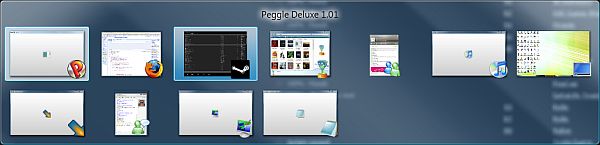
Perhaps the single greatest, but so often neglected, Must-have there is. Just having rudimentary task-switching support in there isn’t enough (hello-o Valve games) - it needs to be fairly quickly and smooth, and included in the original release of the game, not in a patch down the line. This should be as big a priority as graphics or sound. Don’t care if it’s a massive pain to code in. Don’t care if you have to re-start the entire game from scratch to put it in. Alt-tab is absolutely integral to the way we all use our PCs. Half of us essentially live at our computers - we need to be able to task-switch to an IM window or an inbox or even another game in moments, not be locked into one program. Frankly - if your game doesn’t alt-tab, it’s not really a PC game.

Possibly deserving an entry of its own, but in the name of keeping this list to 10 I’ll include it here - all PC games should be able to play in a window. I’ve missed social events because someone’s instant messaged me about going to the pub, but not bothered to phone or text when I don’t get back to them right away because I’m off in a game. One day, the girl of my dreams will magically message me, and by the time I’ve exited the game she’ll have got bored of waiting and declared her love for my arch-nemesis (I don’t actually have an arch-nemesis, but I’m working on it). Then I will hunt down and kill the developer of whichever unwindowable game I was playing at the time. They will appreciate why. Window play is also necessary for 2D games whose resolutions can’t be changed - 800×600 pixels of pretty hand-drawn art look like roadkill in toontown when they’re stretched over a 1680×1050 panel.

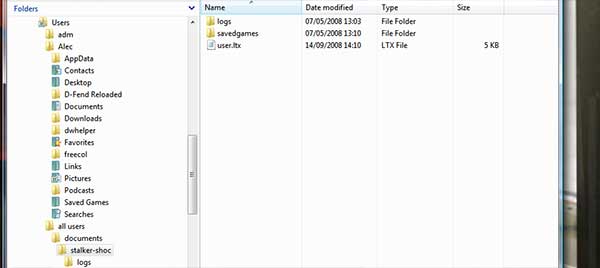
Unbelievably, Clear Sky's savegame location was equally silly as its forerunner's

2. Use standardised install and savegame folders

Everything goes in Program Files by default, please (and, just as importantly, there needs to be an option to install anywhere the player would rather). Don’t have your game install itself into the root of C:\ or an obscure sub-folder, and when you do put it in Program Files don’t stick it inside [Publisher name]\[Developer name] - just stick a folder directly in there under the game’s name. Gamers want to be able to find their game files easily, not have to Google for everyone involved in its creation just so they can work out what folder it’s in.

This is doubly true of savegames. We need to be able to back those suckers up in case of disaster or a Windows reinstall. Know where STALKER hides its savegames in Vista? C:\Users\all users\documents\stalker-shoc, that’s where. Here’s where games whose developers aren’t crazy stick their saves on my PC - C:\Users\Alec\Documents\My Games. In other words, the standard My Games folder inside (My) Documents, a two-click, standard process to reach. To find STALKER’s saves, I have to dig through five separate sub-folders, in something I’d never otherwise look at. Who are these mythical ‘All Users’? They’re not me, that’s who.

Even our beloved World of Goo fails at this. The game goes into Program Files\World of Goo. The savegame - and the savegame alone - goes into C:\ProgramData\2DBoy\WorldOfGoo. ProgramData? Worse, that’s actually a hidden folder by default. Gah!

3. Automatically set themselves to your desktop screen resolution

Don’t default to something horrid and archaic like 640×480. The vast majority of PC gamers use flatpanel monitors, and games running at anything other than their native resolution tend to look horrible. Save us the hassle of changing the setting ourselves, but most of all save the less tech-savvy from having to work out what a resolution even is in the first place, or just putting up with a blurry screen because they’ve no idea how to fix it. Clearly, still allow the resolution to be easily changed to whatever the gamer wants, however: the game needs to support every res the monitor does.

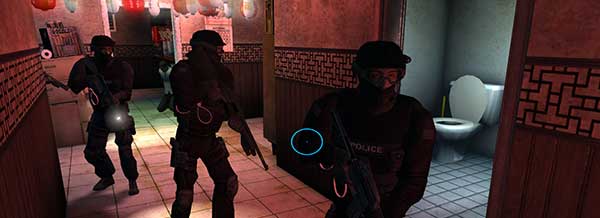
SWAT IV - Man, I loved editing those ini files for widescreen!

4. Support widescreen resolutions.

Widescreen isn’t the future - it’s the present. Just look at the consoles for proof of that, or at the top hits for ‘monitor’ on Amazon. And expecting us to edit an ini file or type in command lines doesn’t count as widescreen support.

5. Uninstall in seconds.

Don’t have it laboriously check every single damn file before it has the grace to remove ‘em - just wipe the folder, pull the main hooks out of the registry and be done with it. I uninstalled the FIFA 09 demo today, and it all but locked up my PC for ten minutes while it did its ridiculous, disc-churning thing. Then I uninstalled the King’s Bounty: The Legend demo, and it was gone in the blink of an eye. That’s the way to do it. When I want someone to leave my house, I just want them gone - I don’t want them hanging around on the doorstep making tedious chit-chat for half an hour. Tied into this is installing neatly in the first place to ensure removal is simple - the game should all end up in one place, not explode tiny bits of itself all over the hard drive.

FIFA 09 - takes 12 years to uninstall

6. Don’t require the CD/DVD in the drive to play.

Again, we’re talking about a PC, a device with hundreds of gigabytes of storage. A game needing to look at a plastic disc entirely external to the game install folder whenever it runs is openly ludicrous. I know it’s for copy protection’s sake (and even so is of debatable effectiveness in this day and age), but the annoyance to legit customers surely outweighs a few extra lost sales before the inevitable no CD crack turns up anyway. Requiring PC gamers to scrabble through a vast pile of discs just to play the game they’ve already installed is contrary to the nature of the platform, and lures people towards less than legal solutions that may ultimately push them further towards piracy. And you wouldn’t want that, would you publishers?

Continue here : rockpapershotgun.com

Technorati Tags: ,,
| Continue Reading..

Windows 7 M3 Build 6780: Pictures and Videos

Yes, new post about latest Windows 7 M3 Build 6780. Background: I’ve reported priori Windows 7 versions before.

Start Menu: the visual design of search box and shutdown/lock buttons are changed. The right panel is simplified.


What programs are installed?

Accessories

Calculator

User Account Control appeared only once during my experience. When I clicked SnagIt installer UAC popped up. That’s very nice to see Microsoft has decided to restrain UAC.

source: thinknext.net

Technorati Tags: ,,
| Continue Reading..

Windows 7: Boot time under 15 seconds?

When Microsoft was developing Vista, or Longhorn, as it was known way back when, company officials were fond of making promises about ways that Microsoft would improve on Windows XP with its next-generation Windows release.

With Windows 7, Microsoft’s goal seems to be to provide as few promises as possible against which the final product can and will be compared and measured. That said, over the Labor Day weekend in a post by Distinguished Engineer Michael Fortin — who leads the Fundamnetals feature team in the Core Operating Systems Group — Microsoft did dangle one tangible tidbit about Windows 7. From the post:
“For Windows 7, a top goal is to significantly increase the number of systems that experience very good boot times. In the lab, a very good system is one that boots in under 15 seconds.”

(The reason I put a question mark in the headline of my post is because Fortin doesn’t actually go so far as to say that Microsoft is promising to hit the rarefied “in the lab” boot-time measure. But the implication is definitely there.)

The August 29 post goes on to discuss how Microsoft is aiming to reduce the number of system services in Windows 7, “as well as reduce their CPU, disk and memory demand” as part of the quest to improve overall system performance with Windows 7. Windows 7 will include more enhancements to pre-fetching, which was introduced initially as part of Windows XP, according to Fortin’s post, and more parallelism in driver initialization — two more ways Microsoft is counting on speeding up initial system boot times.
Microsoft also is working with PC makers to show them ways to improve Windows 7 system performance, as well, Fortin blogged. He wrote:

“(W)e’d like to point out there is considerable engagement with our partners underway. In scanning dozens of systems, we’ve found plenty of opportunity for improvement and have made changes. Illustrating that, please consider the following data taken from a real system. As the system arrived to us, the off-the-shelf configuration had a ~45 second boot time. Performing a clean install of Vista SP1 on the same system produced a consistent ~23 second boot time. Of course, being a clean install, there were many fewer processes, services and a slightly different set of drivers (mostly the versions were different). However, we were able to take the off-the-shelf configuration and optimize it to produce a consistent boot time of ~21 seconds, ~2 seconds faster than the clean install because some driver/BIOS changes could be made in the optimized configuration.”

The much-touted official “Engineering Windows 7? blog has provided a lot of words about how Microsoft developers think about building an operating system and how/why certain trade-offs are made. But specifics on Windows 7 features? Sounds like Microsoft won’t be sharing anything substantial on that until it releases a broader test build of 7, which is expected around the time of the Professional Developers Conference in late October.

source: blogs.zdnet.com

Technorati Tags: ,

| Continue Reading..

Microsoft details DirectX 11: shader model 5, hardware tessellation, multithreaded computing

Taking a step forward, Microsoft planned to not only improve in hardware rendering with the recently announced DirectX 11 API, but also expand the way software engineers could get their programs to work efficiently on modern computer hardware.

Upon reflection of the special feature by Kevin Gee of Microsoft (by way of Gamasutra's XNA portal), Microsoft plans to dive into the mechanics of multiple core and multithreaded computing by way of lower level hardware support.

Communicating with the computer hardware at the "down-level," DirectX 11 is expected to serve as the Windows Display Driver Model (WDDM) of the next Windows, just as DirectX 10 was to Windows Vista.

But unlike DX10, DX11 introduces a "no break" in-between the current generation API, in the same manner that DirectX10 introduced a discontinuity from DirectX 9. As announced before, DirectX 11 will be backward compatible with DirectX 10 hardware and supporting operating systems.

This would mean that Windows Vista and DirectX 10.1 hardware will be able to handle DirectX 11, though Gee confirms that the next generation application programming interface will release by the time the next Windows operating system ships to shelves as well.

In DX11, programmers will be able to streamline engineering of software for multi-core and multi-CPU computers. This is because Microsoft plans to not only implement rendering contexts (processing scheduling) and deferred contexts, but also asynchronous API calls.

This asynchronous system extends to communications and transactions between a multi-core CPU and a GPU, or a multi-core CPU and a multiple-GPU card, which either option would heed the instructions as listed by the primary immediate context and the added deferred contexts.

In addition to that, DX11 takes the idea of general purpose GPU processing and mixes in cross-hardware support. Regardless of graphics chip manufacturer, all modern GPUs with shader processors can be used for helping in processing applications.
But for graphics powerusers and game developers, perhaps the most interesting feature that DirectX 11 has planned for implementation is the inclusion of hardware tessellation. Microsoft's engineers introduced three hardware stages for the rendering pipeline that will allow high power GPUs to perform tessellation over hardware: the hull shader, the tessellator, and domain shader.

With DX11 also comes new texture compression methods BC6 and BC7. Microsoft boasts that these two compression formats are the best they can offer for the ratio of high-quality over performance.

Block compression 6 (BC6) compresses high dynamic ranging (HDR) data at a ratio of 6:1, given hardware support for decompression. BC7 offers 3:1 compression ratios for 8-bit low dynamic range (LDR) data.

DirectX 11 also introduces Shader Model 5 for High Level Shader Language (HLSL), providing a better way graphics programmers will be able to implement shader programs. It also adds double-precision support, which allows programmers to tackle shader specialization with polymorphism, objects, and interfaces.

Source : pc.qj.net

Technorati Tags: ,,
| Continue Reading..

Windows Live FrameIt, a Small Piece of Windows Live Wave 3

Microsoft is currently cooking Wave 3 of its Windows Live suite of products and services. As of July 30, the Redmond company unveiled Windows Live FrameIt, a new Windows Live service built as an integral part of Wave 3.

FrameIt is in beta stage as of yet, but it is open to the general public. The service is designed to enhance the content delivered to digital photo frames. According to the official description of FrameIt, users will be able to compile photo collections and then have them streamed directly to a digital photo frame. In this regard, all devices featuring RSS capabilities will be able to receive photos via FrameIt.

"FrameIt has some wrinkles that we are still trying to iron out and we have a lot of features in the pipeline. Please accept our apologies if you run into any of our bugs," revealed a Windows Live program manager. Initially reported by LiveSide, FrameIt can gather content from an extensive catalog of media sources.

Users will be able to stream not only photos, but additional items through the service from websites offering Photo-sharing, news and information, learning and entertainment materials. According to Microsoft, users are free to have collections with up to 100 different sources. In the end, the Redmond company also permits users to set up customized settings for their feeds. The personalization options include the resolution of images as well as the background color.

"Windows Live FrameIt allows you to gather images and content from across the Internet onto your digital photo frame. You can use FrameIt to include information services, like weather forecasts, amongst your digital photos. You can also use it to gather digital photos from your friends and family onto your frame. Even if everyone you know is using a different photo sharing service, you can include their photos on your frame. To do this, you need to know the RSS feed for their photos or you can use the media sources we've created for various sites," Microsoft said in the welcome message to FrameIt.

source: news.softpedia.com

Technorati Tags: ,,
| Continue Reading..

First look at Nvidia’s new GeForce 9-series laptop graphics cards

Nvidia recently revealed that their G92 GPU will soon be released in its mobile guise, but so far the company has been very tight-lipped over the details. However, Justin of Xotic PC, a US-based gaming PC and laptop manufacturer, has just posted 3DMark scores and the specs of the new GeForce 9800M GT graphics card on the notebookreview.com forums.

The screenshots do leave room for speculation on some points however. As you can see in this screenshot, GPU-Z tells us that the GeForce 8800M GTX card was based on the G92 GPU design whereas the GeForce 9800M GT uses a new GPU design called '060B'. This name doesn't follow Nvidia's typical codename naming convention so could indicate anything from an error with GPU-Z to the GeForce 9800M GT being a totally new and unknown design.

GPU-Z also reports that the 9800M GT only has 6 ROPs, a full 10 ROPs less than the GeForce 8800M GTX. ROPs are usually laid out in sets of four, making 6 a peculiar number. This could either be caused by GPU-Z reading the amount of ROPs in the GeForce 9800M GT incorrectly or it could be reading 6 sets of 4 ROPs, making a total of 24.

Clock speeds remain the same as with the GeForce 8800M GTX, with a 500MHz core, 799Mhz (1.598Ghz effective) memory and the stream processors running at 1.250GHz. The hardware produced results of 9,682 3DMark06 points, with 3DMark Vantage hitting P4130 in the test system which used an Intel Core 2 Xtreme X9100 mobile CPU.

Kobalt Computers' Neil Richards has also played with the new laptop GPU and told us, “What I can confirm for definite is that the performance of the 9800M GT is marginally better than an 8800M GTX, and £130 ex VAT cheaper”. That the 9800M GT will knock the previously reigning 8800M GTX from its pedestal and cost less can only be a good thing for mobile gaming, bringing down the often high cost associated with gaming on the go.

The launch of the mobile 9-series coincides with Intel’s launch of the new Centrino 2 yesterday, so the next generation of gaming laptops are just round the corner. Centrino 2 is the long-awaited update to the incredibly successful Centrino platform, and brings new 45nm Penryn processors (including the new Xtreme X9100), 802.11/n Wi-Fi, optional DDR3 memory support and Wi-MAX to laptops. We expect to have laptops based on all this new technology in the next two weeks.
More images for this article:

3dMark Vantage on an Nvidia GeForce 9800M GT

3dMark Vantage on an Nvidia GeForce 9800M GT


3dMark06 on an Nvidia GeForce 9800M GT

3dMark06 on an Nvidia GeForce 9800M GT


Kobalt Nexus 3 gaming laptop

Kobalt Nexus 3 gaming laptop


Continue Reading : custompc.co.uk


Technorati Tags: ,
| Continue Reading..

MySQL versus SQL Server

One if the great things about doing Fasttrack reviews is getting feedback from ISV’s. We were recently in a review where the ISV was using both SQL Server and MySQL. Of course working for Microsoft my first question was to ask why they had chosen to use MySQL. As expected the reply was because they required a lot of databases and they believed that the freely distributable version of SQL Server was still limited in the number of concurrent users it could support.

We explained that when we used to ship SQL Server 2000 MSDE there was indeed a 5 concurrent user throttle built into the product, but that was removed when we introduced SQL Server 2005 Express (Express). The only limitations that now exist are that Express addresses a maximum of 1 Gb of memory and a maximum single database size of 4Gb. Of course you can have multiple 4Gb database on a single machine if you wish.

What did surprise me to learn from the conversation is that ISV’s, who don’t distribute their application as open source, require a commercial license for MySQL. The ISV we were talking to had negotiated some form of unlimited distribution rights but it was version specific. They were several major versions out of date, probably unable to get support and lacking key functionality such as stored procedures. So for ISV’s whose database requirements are satisfied by SQL Express it’s clearly a more practical option. If you do need a more scalable version of SQL Server then because it ‘s the same code base you should be able to move your application across to Workgroup, Standard or Enterprise editions of SQL Server with no effort at all.

We then went onto talk about how ISV’s could deploy Express databases within their application. Essentially you need to be aware of two different requirements. The first is how you install Express; the second is how you install your database onto a client’s machine.

There is an excellent article on MSDN here that outlines all the options available to you for installing SQL Server Express. The options available to you range from using a command line install , to creating a wrapper around the installation of your application and Express, to creating a ClickOnce deployment.

This article here discusses using Xcopy Deployment for the actual database itself. In other words installation can be as simple as copying the database file to an expected directory and then starting the application.

So the entire process is very flexible and you can choose a deployment method that suits you and your client’s requirements.

What we then went onto discuss is how Express comes in several different downloads. So for example if you wish to have the minimum footprint you can download and install just the relational database. However if you want additional tools you can download the SQL Server Express Edition with Advanced Services. The latter also includes SQL Server Management Studio Express, Reporting Services and Full Text indexing. As the figure below illustrates Management Studio Express provides quite a lot of the functionality that Management Studio from the Standard and Enterprise Editions contains.

clip_image002

Management Studio Express with the online database backup dialog displayed.

Just to complicate things a little there is yet another download you might want to look at which is the Microsoft SQL Server Express Toolkit which provides some of the connectivity components and Business Intelligence Development Studio for authoring reports as well as a few other assorted components. (see below).

clip_image003

While I’m on the topic of reporting services its worth mentioning the report controls that exist in Visual Studio. These allow developers to embed reports within rich client applications. The reports can be sourced from a Report Server or from files on the local disk. This is ideal for mobile apps where the user will be disconnected from the network but requires an offline database and reporting capability. One concern is that if the reports are held on the local machine then they can be altered by the user. However we provide the capability to encrypt the reports to prevent this.

Installing SQL Server 2005 Express Edition Toolkit

So SQL Express really is a fully featured version of SQL Server with very few restrictions. That means you get all the database features you should be able to take for granted such full locking and transaction support, all the T-SQL syntax including support for functions, stored procedures as well as full support for DBA functionality such as online backup.

I’ve had a few conversations with ISV’s where they have deployed database on machines that are subject to being switched off by users. With desktop databases their experience is often that they have frequent corruptions. This adds to support costs when the user needs assistance “un-corrupting” the database. Because SQL Server Express has the same transaction log and recoverability as the other members of the SQL Server family it’s far more robust in these environments. When the machine reboots it will simply rollback any uncompleted transaction and then carry on as if nothing happened.

Up to now I’ve only mentioned the 2005 edition of Express. So what can you expect in 2008? Well that a topic and a half in its own right. However I’ll briefly mention two new features that I believe will be worth considering. The first is spatial. Anyone who has look at SQL Server 2008 will be aware that we are adding spatial capabilities to this release. What this allows me to do is store coordinates in a data type that represent various geometrical features such as a point a line or a polygon and then do set based operations on them. So a very simple example might be “show me all the locations within a region that stretches 30 miles around the edge of London. The locations would be stores as records containing a field with the point coordinates and London would be a record with a field containing the coordinates of a polygon. We would then join them together and apply a function to the London coordinates that created a 30km buffer around the London shape. It sounds far more complex than the actual SQL query which is quite simple to construct. The great thing is all the spatial features are in the 2008 version of Express. This provides ISV’s with some great opportunities for new apps. The second new feature is Policy Management. This allows an ISV to create policies which define “best practice” for managing the database and enforce these on the user. I think this has the potential to reduce ISV support cost significantly. Again this feature is available in all 2008 editions including Express.

So by the end of the session the ISV left convinced that SQL Express provided more functionality over what they had with their existing solution, it would be easier to integrate into their application that their existing offering and it really was “freely distributable”.

(There is of course SQL Server Compact, but that's for another discussion . . .)


Source: blogs.msdn.com
Posted By: IndoSourceCode

Technorati Tags: ,,
| Continue Reading..

33 New Places to Get Design Inspiration

The quality of design sites around has just been escalating and escalating. Last year we published two articles on finding design inspiration - 34 Places to Get Design Inspiration On and Off and the follow up 60 More Places to Get Design Inspiration. Since then I’ve been collecting new sites that didn’t make those two lists, and today I’m happy to deliver 33 New Places to Get Design Inspiration! Without further ado:

1. Depthcore

Visit Site


Into digital art, 3d, and visual goodness? Look no further.

2. Rasterized

Visit Site


Another old school art group

3. DesignFlavr

Visit Site


DesignFlavr is my favourite new inspiration site by a country mile. Great content, great categories.

4. Before & After Magazine

Visit Site


It’s not all free, but there is some good stuff to be found here

5. SmashingMagazine’s Inspiration Category

Visit Site


SmashingMagazine have really been putting out the goods in their inspiration category

6. YouTheDesigner

Visit Site


YouTheDesigner is a great blog that just keeps getting better. Gino has been putting out stellar content all around and built in a nice inspiration category to boot!

7. PSDTUTS Inspiration Category

Visit Site


Hey it’s PSDTUTS! Sean Hodge’s awesome inspiration posts have wrapped up everything from mecha to icons.

8. Abduzeedo’s Inspiration Category

Visit Site


Abduzeedo’s got a great set of posts covering HD photos, design and much more

9. Most Inspired

Visit Site


A neat aggregator complete with a blog worth keeping up with

10. LogoLounge

Visit Site


Some decent stuff at LogoLounge, though it’s not my favourite logo inspiration site (that of course being FaveUp!!)

11. Outlaw Design Blog Inspiration Category

Visit Site


Outlaw’s got some beeeautiful inspiration images, particularly in his digital paintings post.

12. SpoonGraphics Inspiration Category

Visit Site


Another blog featuring some occasional great inspiration posts.

13. DesignYouTrust

Visit Site


Social Inspiration - this site is one to watch out for!

14. AllTop - Design

Visit Site


Not so much visual inspiration as textual. Guy Kawasaki’s AllTop features a ton of great design blogs

15. TypeSites

Visit Site


Like your inspiration with a bit of typographic style?

16. Fuel Your Creativity

Visit Site


Another up and comer in the design blog scene with lots of great posts to choose from!

17. Just Creative Design

Visit Site


It’s not *just* creative design, it’s also damn useful! Check out JCD’s list of inspiration sites

18. QBN

Visit Site


You might remember QBN in its previous incarnation as NewsToday - it’s still just as good as ever!

19. FormFiftyFive

Visit Site


A little more abstract and offbeat than some of my other picks, FFF runs inspirational images daily and they are worth seeing!

20. Muse

Visit Site


Not only great aesthetic choices, but Muse also goes behind the work to profile the artists and designers behind a job.

21. AIGA’s Design Archives

Visit Site


AIGA’s design archives are the kind of place you can get lost in, it is AIGA after all!

22. Fawnt

Visit Site


Need a font to get your project started? Fawnt can give you a quick typographic shot in the arm!

23. CarbonMade Portfolios

Visit Site


I love looking through other people’s portfolios, especially when the site is as fun and colourful as CarbonMade!

24. Coroflot’s Portfolios

Visit Site


Coroflot is the grand-daddy of porftolio sites and it’s still rockin’

25. Behance’s Portfolios

Visit Site


Behance has been taking portfolios to a new social networking dimension and getting a lot of press. Some great stuff in there.

26. Flickr Groups

Vandelay’s Best Flickr Groups for Designers


Flickr has become a great way to get design communities participating, Vandelay has rounded up a ton of them, but really you should just visit the PSDTUTS Flickr Group!

27. Vandelay Design

Visit Site


Our own Steven Snell’s home turf where he publishes tons and tons of great content, including inspirational wrap ups

28. Fubiz

Visit Site


Don’t speak French, don’t worry, neither do I! But Fubiz is still worth visiting, in particular their collection of 70 amazing business card designs

29. Inspiration Folder

Visit Site


Not the greatest looking site, but quite functional. Inspiration Folder lets you collect and share inspirational designs

30. WeHeartIt

Visit Site


This is one of my favourite new sites, share your images in a sort of social-delicious-inspiration-image-fest!

31. AisleOne

Visit Site


Old school graphic inspiration focusing on grids, minimalism and modernism, nice!

32. CoolBoom

Visit Site


Need some sweet architectural inspiration? Try CoolBoom!

33. VisualizeUs

Visit Site


Similar to WeHeartIt, this is Delicious but for images. Really, really cool!


Source: freelanceswitch.com
Posted By: IndoSourceCode

Technorati Tags: ,,
| Continue Reading..

Enter your email address:

Delivered by FeedBurner

Followers